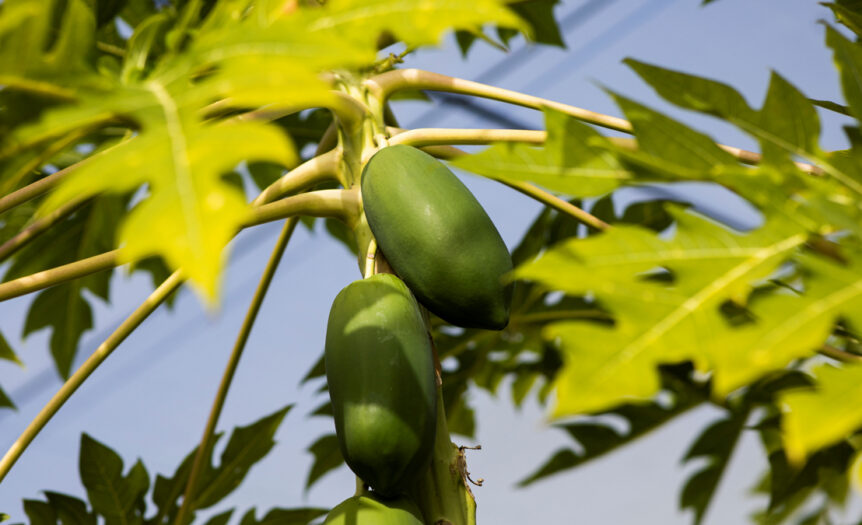
With the right care, papaya trees thrive in Florida backyards, producing sweet fruit and flowers. Depending on the variety, this slender tree can produce more than one bright white flower in less than 12 months.
Well suited to Central and South Florida conditions, papaya is an increasingly popular choice for homeowners looking to grow fruit. Successful trees depend on proper site selection, ample drainage, cold protection and pest awareness. These are challenges that the University of Florida Institute of Food and Agricultural Sciences (UF/IFAS) address in Papaya Growing in the Florida Home Landscape, the latest Ask IFAS publication, also available in Spanish.
The document goes beyond quick tips and includes a comprehensive, stepbystep guide for successfully growing papaya in a Florida yard, its origins and market.
While Florida is not a major player in papaya production, either nationally or globally, it is growing steadily as a favorite among residential property owners and growers. The Sunshine State has a niche industry. Within the United States, Hawaii dominates papaya production, which accounts for most of the domestic output.
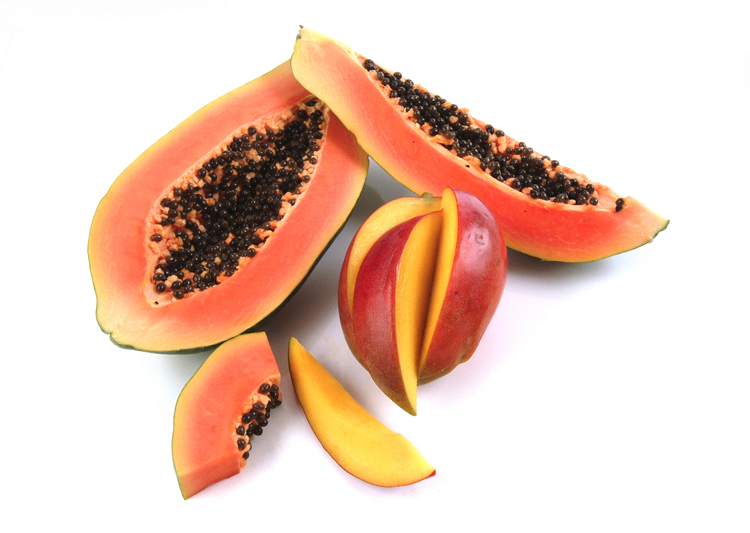
Florida contributes a minor share, with production largely concentrated in South Florida and geared toward local or specialty markets. That is quickly changing.
There are numerous varieties of papaya. The seeds are not commonly for sale, but when available, they come in small amounts. This makes a reliable nursery the best place to find the right tree.
What exactly is a papaya plant and how does it produce fruit? The publication explains the plant’s tropical origins and how it grows in warm climates, then walks readers through the three plant types and why that distinction matters for fruit production. Understanding which plants produce fruit helps gardeners make better planting decisions.
What should you consider when planting papaya to ensure long-term success? Some nurseries offer papaya plants, and the first step is to choose a healthy tree. Commonly, nursery papaya trees are grown in 3-gallon containers. Learn what to look for and why choosing the right height is important. This document explains why you should avoid large trees in smaller containers.
What conditions do papaya trees need to thrive in a Florida backyard? Learning practical tips on planting and spacing, as well as emphasizing factors like wind exposure, cold weather or poor drainage can significantly reduce growth and yield. These insights help homeowners find the best environment for healthy, productive trees.
How do you care for papaya plants and prevent common problems? The publication dives into daily care, including fertilizer schedules, irrigation needs and maintenance practices. It also identifies common pests and diseases, such as papaya fruit fly and ringspot virus. Readers will learn ways to manage them. This makes it especially useful for beginners looking to spot issues early and keep plants productive year round.
Are there cues to harvesting? Knowing when to pick the fruit, how to ripen it and ways to enjoy papaya are also explored.







 Deering Estate
 Massage Envy South Miami
 Calla Blow Dry
 My Derma Clinic
 Sports Grill
 The Healthy Kitchen
 Sushi Maki
 Golden Rule Seafood
 Malanga Cuban Café


 Kathleen Ballard
 Panter, Panter & Sampedro
 Vintage Liquors
 The Dog from Ipanema
 Rubinstein Family Chiropractic
 Your Pet’s Best
 Indigo Republic
 Animal Health and Rehab
 Maurice’s Jewelers
 ATR Luxury Homes


 2112 Design Studio
 Hamilton Fox & Company
 Creative Design Services
 Best Pest Professionals
 HD Tree Services
 Trinity Air Conditioning Company
 Cisca Construction & Development
 Mosquito Joe
 Cutler Bay Solar Solutions


 Miami Royal Ballet & Dance
 Christopher Columbus
 Pineview Preschools
 Westminster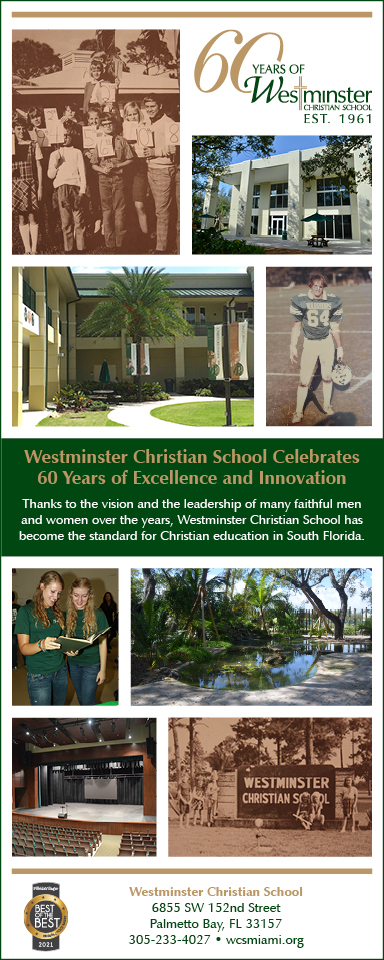
 Carrollton
 Lil’ Jungle
 Frost Science Museum
 Palmer Trinity School
 South Florida Music
 Pinecrest Orthodontics
 Dr. Bob Pediatric Dentist
 d.pediatrics


 South Miami Women’s Health
 Endodontix Dental Group
 The Spot Barbershop
 My Derma Clinic




 Miami Dance Project

 Rubinstein Family Chiropractic
 Indigo Republic

 Safes Universe
 Vintage Liquors
 Evenings Delight





 Atchana’s Homegrown Thai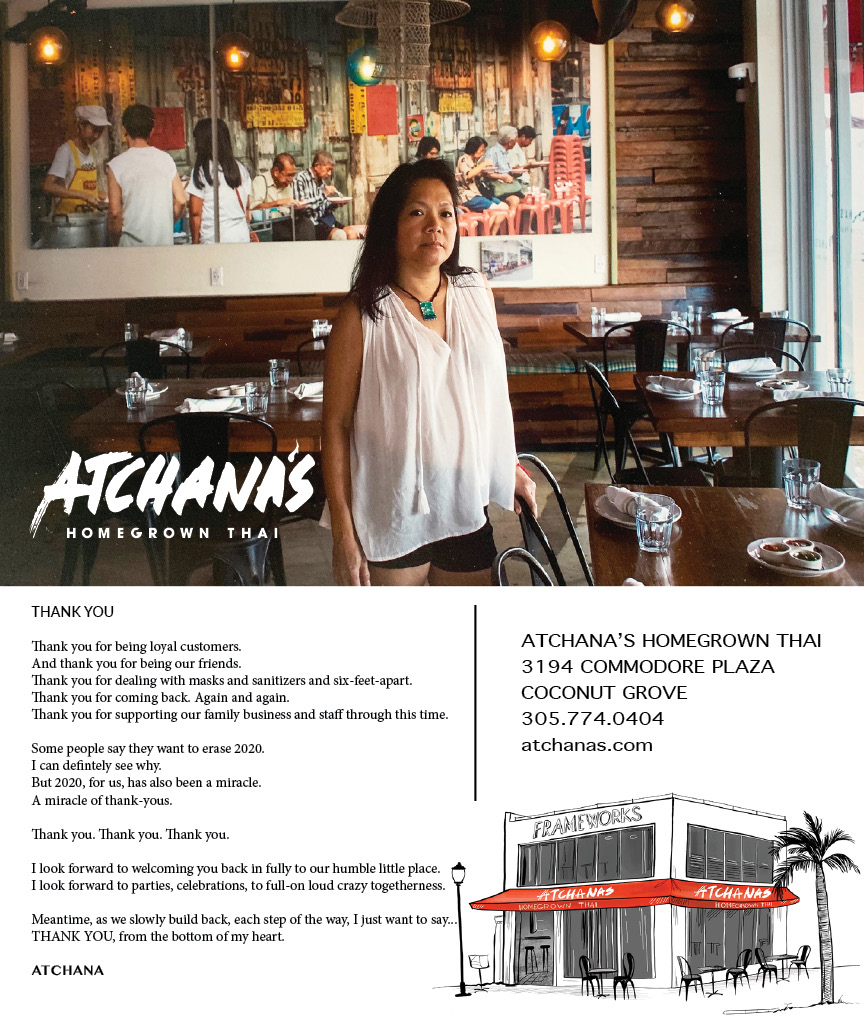
 Baptist Health South Florida

 Laser Eye Center of Miami
 Visiting Angels
 OpusCare of South Florida



 Your Pet’s Best

 HD Tree Services
 Hamilton Fox & Company

 Creative Design Services