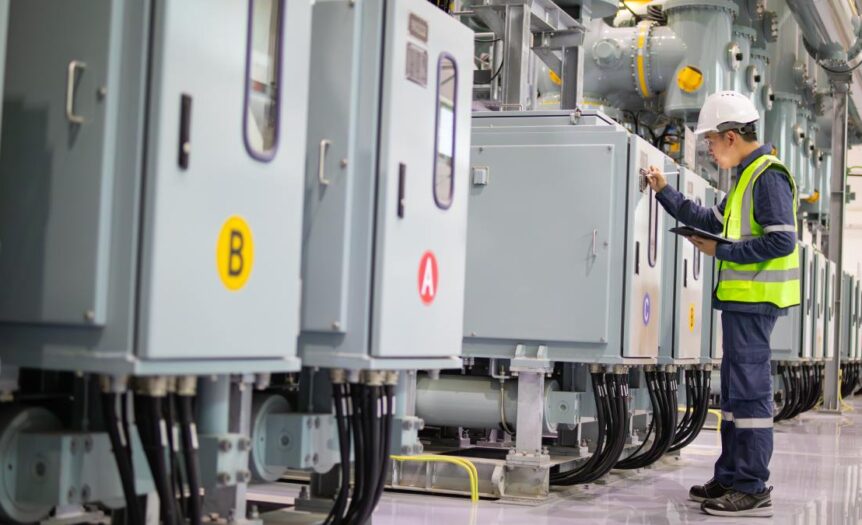
When an industrial power supply fails, it can bring an entire production line to a halt, creating significant downtime and stress to get operations back on track. Under pressure to quickly find a replacement, it’s easy to make hurried decisions that may lead to bigger problems in the future. Learn about a few common mistakes to avoid when replacing an industrial power supply so you can find a solution ASAP.
Grabbing the Wrong Form Factor
Industrial equipment houses components in tight, specific configurations. A power supply must fit perfectly into its designated slot. You might find a unit with the correct electrical specifications, but if the physical dimensions or mounting points are different, it won’t work. Before you order, double-check the form factor and measurements of the old unit to get an exact match.
Overlooking Inrush Current
When a power supply first turns on, it draws a large, brief burst of electricity called inrush current. Your system’s circuit breakers must accommodate this momentary spike. A new power supply with a higher inrush current rating than the old one could trip breakers, which leads to frustrating and unnecessary downtime. It’s a technical detail that’s easy to miss but has immediate operational consequences.
Ignoring Environmental Ratings
This list of mistakes to avoid when replacing an industrial power supply helps you select the right component and get your operations back online safely and reliably. A key component of that selection is finding materials that can withstand the environment you want to expose them to in the workplace. Industrial settings can be harsh. They might have extreme temperatures, high humidity, or vibrations.
Power supplies come with specific operating temperature ranges and other environmental protections. A standard unit placed in an environment that requires a rugged one will fail prematurely. You must match the new supply’s resilience to the conditions of its workplace.
Forgetting About Safety Certifications
Safety certifications like UL or CE are not just stamps on a label. They represent that a product has undergone rigorous tests to meet specific safety and performance standards. A non-certified power supply might be cheaper, but it could pose a fire risk or fail to protect your expensive machinery from electrical faults. The potential cost of a catastrophic failure far outweighs the initial savings.
Final Considerations
A rushed choice can lead to more problems than it solves. Pay close attention to these details for a smooth replacement and equip yourself with high-quality power quality solutions to ensure your main power supply runs on clean, reliable electricity.








 Deering Estate
 Massage Envy South Miami
 Calla Blow Dry
 My Derma Clinic
 Sports Grill
 The Healthy Kitchen
 Sushi Maki
 Golden Rule Seafood
 Malanga Cuban Café


 Kathleen Ballard
 Panter, Panter & Sampedro
 Vintage Liquors
 The Dog from Ipanema
 Rubinstein Family Chiropractic
 Your Pet’s Best
 Indigo Republic
 Animal Health and Rehab
 Maurice’s Jewelers
 ATR Luxury Homes


 2112 Design Studio
 Hamilton Fox & Company
 Creative Design Services
 Best Pest Professionals
 HD Tree Services
 Trinity Air Conditioning Company
 Cisca Construction & Development
 Mosquito Joe
 Cutler Bay Solar Solutions


 Miami Royal Ballet & Dance
 Christopher Columbus
 Pineview Preschools
 Westminster
 Carrollton
 Lil’ Jungle
 Frost Science Museum
 Palmer Trinity School
 South Florida Music
 Pinecrest Orthodontics
 Dr. Bob Pediatric Dentist
 d.pediatrics


 South Miami Women’s Health
 Endodontix Dental Group
 The Spot Barbershop
 My Derma Clinic




 Miami Dance Project

 Rubinstein Family Chiropractic
 Indigo Republic

 Safes Universe
 Vintage Liquors
 Evenings Delight





 Atchana’s Homegrown Thai
 Baptist Health South Florida

 Laser Eye Center of Miami
 Visiting Angels
 OpusCare of South Florida



 Your Pet’s Best

 HD Tree Services
 Hamilton Fox & Company

 Creative Design Services