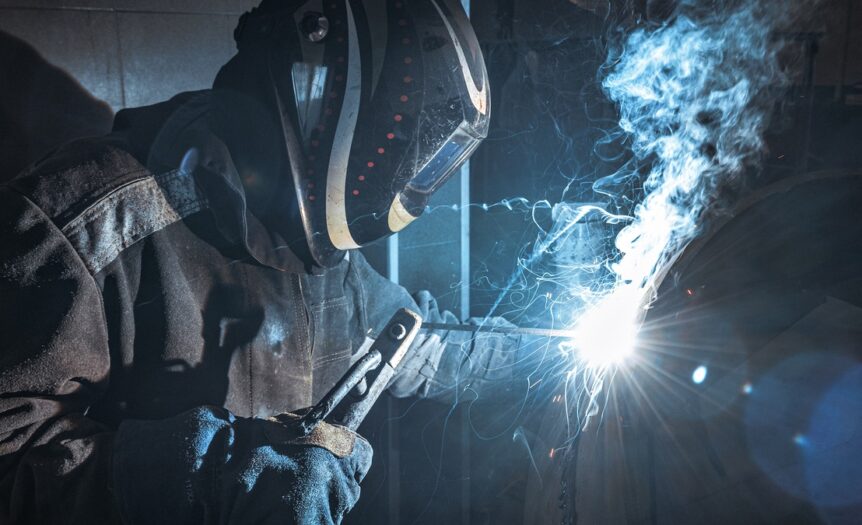
Welding fumes are a serious health risk for welders. That’s why OSHA regulations require employers to protect workers from these hazardous exposures, but the question is how. More specifically, should you rely on fume extractors or respirators for protection? Both methods serve critical roles in welding safety, yet they work differently and offer distinct advantages. Let’s examine the facts so you can make informed decisions about protecting yourself or your team.
How Fume Extractors Work
Fume extractors capture welding fumes at their source before they spread throughout the workspace. These systems use powerful fans and filtration technology to pull contaminated air away from the welder’s breathing zone.
OSHA considers source capture ventilation the preferred method of exposure control. The agency states that local exhaust ventilation should be the primary means of reducing airborne contaminants when feasible.
Fixed Extraction Systems
These mount permanently to workstations and provide consistent airflow patterns. These work best for repetitive welding operations in dedicated areas.
Portable Fume Extractors
These offer flexibility for all job sites and welding positions. When choosing a portable fume extractor, consider factors like airflow capacity, filter efficiency, and mobility requirements for your specific applications.
Understanding Respirator Protection
Respirators create a barrier between the welder and contaminated air. They fall into two main categories: air-purifying respirators that filter incoming air, and supplied-air respirators that provide clean breathing air from an external source.
OSHA mandates respirator use when engineering controls cannot adequately reduce exposure levels below permissible limits. This typically occurs in confined spaces, outdoor work, or situations where fume extraction proves impractical.
Respirator Limitations
Respirators require proper fit testing, training, and maintenance to work effectively. Workers with facial hair, certain medical conditions, or claustrophobia may face challenges using respirators safely. OSHA also emphasizes that respirators should supplement, not replace, engineering controls like ventilation systems.
Comparing Effectiveness
Fume extractors address the root problem by removing contaminants from the work environment. This protects all workers in the area, not just the person wearing protection.
Respirators provide personal protection but leave fumes in the workspace where they can affect other personnel. They also place the burden of protection entirely on individual compliance and equipment maintenance.
Cost Considerations
Initial equipment costs vary significantly between options. Fume extractors typically require higher upfront investment than respirators, but they eliminate ongoing expenses for cartridge replacements and fit testing.
Factor in productivity impacts as well. Fume extractors allow unrestricted movement and communication, as well as fewer workplace-related sicknesses. Meanwhile, respirators can limit visibility and make verbal communication more difficult.
Making the Right Choice
OSHA’s hierarchy of controls prioritizes elimination and engineering controls over personal protective equipment when it comes to welding safety. This means fume extractors should be your first line of defense when technically feasible. Then, you can consider respirators in these scenarios:
- Fume extraction systems cannot achieve adequate protection levels.
- Work occurs in confined spaces or outdoor locations.
- Welding operations change locations frequently.
The most effective approach combines both methods. Use fume extractors as the primary control with respirators as backup protection against high exposure.








 Deering Estate
 Massage Envy South Miami
 Calla Blow Dry
 My Derma Clinic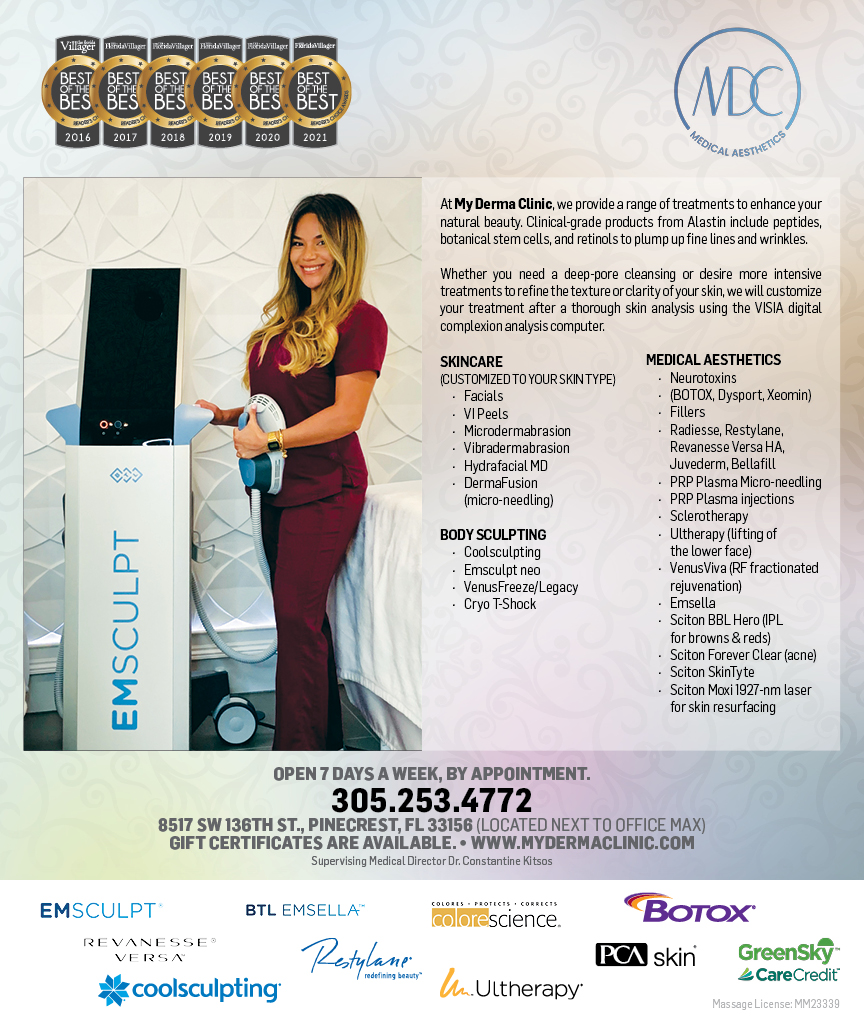
 Sports Grill
 The Healthy Kitchen
 Sushi Maki
 Golden Rule Seafood
 Malanga Cuban Café


 Kathleen Ballard
 Panter, Panter & Sampedro
 Vintage Liquors
 The Dog from Ipanema
 Rubinstein Family Chiropractic
 Your Pet’s Best
 Indigo Republic
 Animal Health and Rehab
 Maurice’s Jewelers
 ATR Luxury Homes


 2112 Design Studio
 Hamilton Fox & Company
 Creative Design Services
 Best Pest Professionals
 HD Tree Services
 Trinity Air Conditioning Company
 Cisca Construction & Development
 Mosquito Joe
 Cutler Bay Solar Solutions


 Miami Royal Ballet & Dance
 Christopher Columbus
 Pineview Preschools
 Westminster
 Carrollton
 Lil’ Jungle
 Frost Science Museum
 Palmer Trinity School
 South Florida Music
 Pinecrest Orthodontics
 Dr. Bob Pediatric Dentist
 d.pediatrics


 South Miami Women’s Health
 Endodontix Dental Group
 The Spot Barbershop
 My Derma Clinic




 Miami Dance Project

 Rubinstein Family Chiropractic
 Indigo Republic

 Safes Universe
 Vintage Liquors
 Evenings Delight





 Atchana’s Homegrown Thai
 Baptist Health South Florida

 Laser Eye Center of Miami
 Visiting Angels
 OpusCare of South Florida



 Your Pet’s Best

 HD Tree Services
 Hamilton Fox & Company

 Creative Design Services