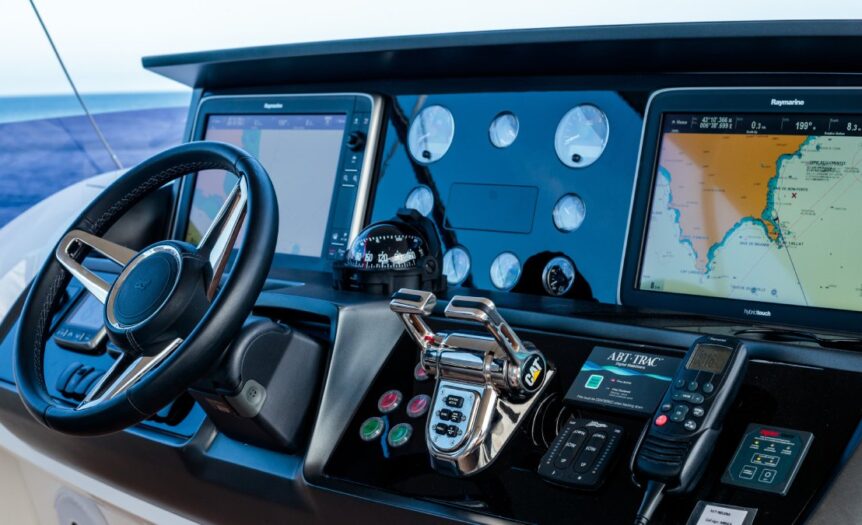
Without an electrical system, your boat wouldn’t be able to function. From navigation lights to your stereo, it powers everything. A little knowledge goes a long way in keeping things running smoothly and safely. Getting a handle on how it all works is key to a trouble-free day on the water. This is why understanding your boat’s power system basics is so important for every owner.
AC vs. DC Power Onboard
Most boats use two types of power. Direct Current (DC) is the 12-volt system powered by your batteries. It provides energy for your engine starter, onboard lighting, pumps, and electronics.
Alternating Current (AC) is the 120-volt system, similar to what you have at home. It powers larger appliances (if you have them on your boat), such as microwaves or air conditioners, and usually requires a generator, inverter, or shore power connection to operate.
Types of Marine Batteries
You’ll typically find two battery types on board: a starting battery to get your engine going and deep-cycle batteries for steady power to run electronics and accessories. Common battery types for boats include flooded lead-acid, AGM (Absorbed Glass Mat), and lithium options.
Each battery has unique maintenance needs and lifespans. The question of how often you should replace your boat batteries depends on the type, usage patterns, and maintenance habits.
Charging and Power Distribution
Your engine’s alternator helps recharge the batteries while running, keeping your system powered up. When docked, a battery charger can maintain battery health through shore power.
Power is distributed through a network of wires, fuses, and circuit breakers, each protecting your valuable equipment. The right wire gauge makes a big difference, as wires that are too thin for the load may overheat and create a fire risk.
Routine Maintenance and Troubleshooting
Routine checks are your best line of defense against electrical issues. Check the battery voltage, clean corrosion from the terminals, and ensure all connections are tight. Dimming lights or difficulty starting the engine might mean your battery is weak.
When charging, connect to the battery first, then plug into the power source to avoid sparks. Issues like flickering lights or frequently tripped breakers are a signal to consult a marine electrician.
A reliable power system is essential for both convenience and safety. By performing regular checks and addressing small issues before they turn into large ones, you can boat with confidence. Proper maintenance is the core of understanding your boat’s power system basics.








 Deering Estate
 Massage Envy South Miami
 Calla Blow Dry
 My Derma Clinic
 Sports Grill
 The Healthy Kitchen
 Sushi Maki
 Golden Rule Seafood
 Malanga Cuban Café


 Kathleen Ballard
 Panter, Panter & Sampedro
 Vintage Liquors
 The Dog from Ipanema
 Rubinstein Family Chiropractic
 Your Pet’s Best
 Indigo Republic
 Animal Health and Rehab
 Maurice’s Jewelers
 ATR Luxury Homes


 2112 Design Studio
 Hamilton Fox & Company
 Creative Design Services
 Best Pest Professionals
 HD Tree Services
 Trinity Air Conditioning Company
 Cisca Construction & Development
 Mosquito Joe
 Cutler Bay Solar Solutions


 Miami Royal Ballet & Dance
 Christopher Columbus
 Pineview Preschools
 Westminster
 Carrollton
 Lil’ Jungle
 Frost Science Museum
 Palmer Trinity School
 South Florida Music
 Pinecrest Orthodontics
 Dr. Bob Pediatric Dentist
 d.pediatrics


 South Miami Women’s Health
 Endodontix Dental Group
 The Spot Barbershop
 My Derma Clinic




 Miami Dance Project

 Rubinstein Family Chiropractic
 Indigo Republic

 Safes Universe
 Vintage Liquors
 Evenings Delight





 Atchana’s Homegrown Thai
 Baptist Health South Florida

 Laser Eye Center of Miami
 Visiting Angels
 OpusCare of South Florida



 Your Pet’s Best

 HD Tree Services
 Hamilton Fox & Company

 Creative Design Services