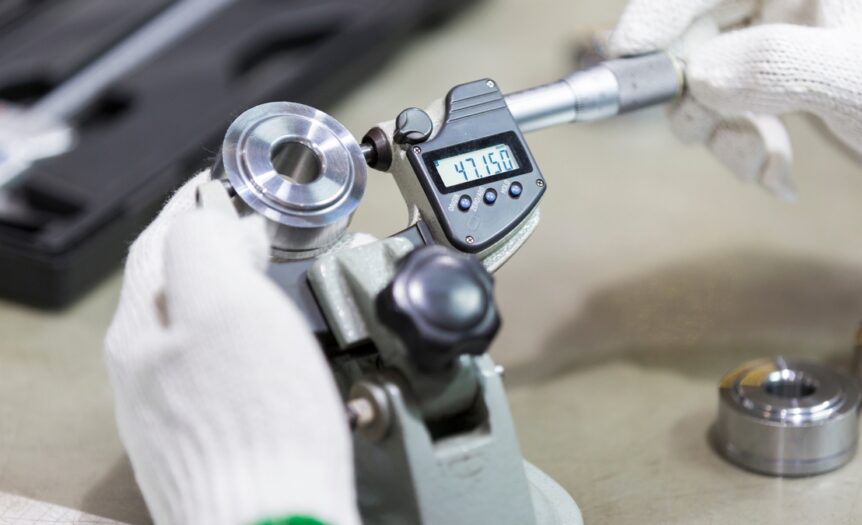
Precision drives every successful manufacturing operation. When tolerances matter and quality standards demand accuracy down to the thousandth of an inch, micrometers become your most trusted measurement tools.
These instruments have evolved far beyond the basic mechanical versions your predecessors used decades ago. Today’s micrometers provide digital precision, offering manufacturers like you the accuracy needed to maintain competitive advantages in demanding markets. Below, we explore all you need to know to leverage micrometers in your manufacturing operations.
What Makes Micrometers Essential
Micrometers measure external dimensions, internal diameters, and depths with precision that standard rulers or calipers cannot match. The screw mechanism provides incremental movement, allowing measurements accurate to 0.0001 inches or 0.002 millimeters.
Three main types serve different manufacturing needs:
- Outside micrometers measure external dimensions like shaft diameters
- Inside micrometers check internal measurements such as bore diameters
- Depth micrometers determine how deep holes, grooves, or steps extend
Each type addresses specific quality control requirements that arise during your production processes.
Digital Advantages Transform Quality Control
Digital micrometers have revolutionized measurement practices across manufacturing floors. These tools eliminate reading errors that plague analog instruments while speeding up inspection workflows.
Key benefits include the following:
- instant digital readouts that prevent misinterpretation
- data output capabilities for direct computer integration
- statistical process control features that track measurement trends
- multiple unit displays switching between metric and imperial instantly
Moreover, you can automate data collection to reduce transcription errors and build comprehensive quality databases that inform process improvements. Whether you’re automating data collection with Mitutoyo micrometers or another brand, this step is integral to maximizing the benefits of micrometers in your operations.
Selecting the Right Micrometer
Your specific application determines which micrometer type serves you best. Consider these factors.
Range Requirements
Choose instruments that cover your typical measurement spans with minimal tool changes.
Resolution Needs
Standard micrometers offer 0.001-inch resolution, while precision versions provide 0.0001-inch accuracy.
Environmental Conditions
Harsh manufacturing environments require sealed digital units that resist coolants, dust, and temperature fluctuations.
Integration Capabilities
Modern production lines benefit from micrometers that connect directly to quality management systems.
Maximizing Measurement Accuracy
Another thing you need to know to leverage micrometers in your manufacturing operations is how to properly use them. Good technique ensures reliable results every time you measure. Clean both the micrometer and workpiece before taking measurements. Apply consistent pressure using the ratchet or friction thimble to avoid over-tightening.
Temperature affects accuracy more than most operators realize. Allow both the instrument and workpiece to reach the same temperature as your calibration environment. This practice prevents thermal expansion errors that compromise measurement validity.
And lastly, regular calibration maintains instrument reliability. Establish calibration schedules based on usage frequency and criticality of measurements in your quality system.
Building Better Quality Systems
Micrometers integrate seamlessly into comprehensive quality control programs. They provide the measurement foundation that statistical process control requires while generating data that drives continuous improvement initiatives.
When you combine accurate measurement tools with systematic quality approaches, you create manufacturing processes that consistently deliver products meeting the tightest specifications your customers demand.








 Deering Estate
 Massage Envy South Miami
 Calla Blow Dry
 My Derma Clinic
 Sports Grill
 The Healthy Kitchen
 Sushi Maki
 Golden Rule Seafood
 Malanga Cuban Café


 Kathleen Ballard
 Panter, Panter & Sampedro
 Vintage Liquors
 The Dog from Ipanema
 Rubinstein Family Chiropractic
 Your Pet’s Best
 Indigo Republic
 Animal Health and Rehab
 Maurice’s Jewelers
 ATR Luxury Homes

 2112 Design Studio
 Hamilton Fox & Company
 Creative Design Services
 Best Pest Professionals
 HD Tree Services
 Trinity Air Conditioning Company
 Cisca Construction & Development
 Mosquito Joe
 Cutler Bay Solar Solutions


 Miami Royal Ballet & Dance
 Christopher Columbus
 Pineview Preschools
 Westminster
 Carrollton
 Lil’ Jungle
 Frost Science Museum
 Palmer Trinity School
 South Florida Music
 Pinecrest Orthodontics
 Dr. Bob Pediatric Dentist
 d.pediatrics


 South Miami Women’s Health
 Endodontix Dental Group
 The Spot Barbershop
 My Derma Clinic




 Miami Dance Project

 Rubinstein Family Chiropractic
 Indigo Republic

 Safes Universe
 Vintage Liquors
 Evenings Delight





 Atchana’s Homegrown Thai
 Baptist Health South Florida

 Laser Eye Center of Miami
 Visiting Angels
 OpusCare of South Florida



 Your Pet’s Best

 HD Tree Services
 Hamilton Fox & Company

 Creative Design Services